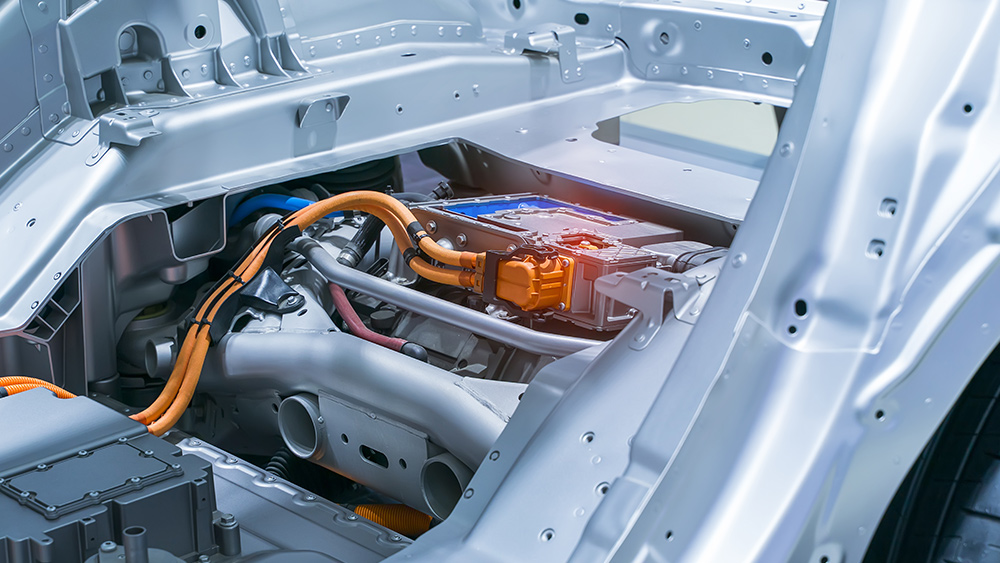
Surviving an EMP: How to keep your car running when modern tech fails
12/03/2025 / By Evangelyn Rodriguez

- Cars built after the 2000s are packed with electronic control units (ECUs) and sensors, making them susceptible to EMP attacks, while older (pre-1970s) mechanical vehicles have better survival odds.
- Stockpile essential components like ECUs, transmission control modules (TCMs), ignition coils, fuel pumps and sensors to increase your odds to reviving your car post-EMP.
- Paper repair manuals and OBD-II scanners can help you diagnose and replace damaged parts post-EMP.
- Spare parts must be stored in Faraday cages (metal trash cans, shielded bags or lined garages) to block electromagnetic interference.
- If a car fails, attempt a restart, battery reset and scanner diagnostics. If electronics are fried, systematically replace shielded spares—starting with the ECU—with the help of repair manuals.
The threat of an electromagnetic pulse (EMP)—whether from a solar storm, nuclear detonation or directed-energy weapon—poses a catastrophic risk to modern society. One of the most immediate casualties would be transportation, as nearly every vehicle manufactured in the last two decades relies on delicate electronics vulnerable to EMP-induced failure. For people who depend on their cars for survival, preparation is key—but not all vehicles are equally at risk. Understanding which cars are most susceptible, how to shield critical components and what repairs may be necessary could mean the difference between mobility and being stranded in a crisis.
Assessing your vehicle’s vulnerability
Not all cars are created equal when it comes to EMP resistance. Modern vehicles, packed with electronic control units (ECUs), sensors and computerized systems, are far more likely to be incapacitated than older models. Cars from the 1970s or earlier, with minimal electronics, stand a much better chance of surviving an EMP unscathed. Even if a vintage vehicle’s mechanical ignition coil were damaged, replacement would be far simpler than diagnosing and repairing a fried network of microprocessors in a newer car.
For those driving late-model vehicles, the harsh reality is that an EMP could render them effectively totaled. With multiple interconnected systems—from transmission control modules to digital dashboards—repairs may be impractical without professional help and a steady supply of spare parts. In such cases, acquiring an older, simpler vehicle as a backup may be the wisest investment.
Essential preparations: Manuals, scanners and spare parts
Before disaster strikes, proactive measures can drastically improve the odds of getting a car back on the road. A paper repair manual—such as those from Haynes—is indispensable, especially for those without mechanical expertise. These manuals provide step-by-step instructions for diagnosing and replacing damaged components.
A malfunction scanner is another critical tool. While there’s no guarantee a car’s computer will function post-EMP, a scanner can help diagnose issues beforehand and may still be able to retrieve error codes if the system partially survives. Familiarizing yourself with this device now could save precious time later.
Stockpiling spare parts is equally vital. Key components likely to fail include:
- Engine Control Units (ECUs) – Critical for engine operation and managing fuel injection, ignition timing and airflow
- Transmission Control Modules (TCMs) – Governs shifting patterns and torque converter function
- Ignition coils and controllers – Essential for spark generation; older mechanical versions are more resilient
- Fuel pumps – Electrically controlled in modern vehicles; failure means no fuel delivery
- Sensors – Oxygen, temperature and speed sensors feed data to the ECU; faulty readings can cripple performance
Non-essential electronics (like infotainment systems) can be ignored, but drivers must verify whether any secondary systems (such as instrument clusters) have failsafes that could prevent operation.
Shielding spare parts with Faraday cages
Simply owning spare parts isn’t enough—they must be shielded from EMP effects. A Faraday cage—a conductive enclosure that blocks electromagnetic fields—can protect vulnerable electronics. Options range from purpose-built Faraday bags to DIY solutions like metal trash cans with tight-fitting lids.
According to BrightU.AI‘s Enoch, preppers can build a simple DIY Faraday cage by lining a metal container (such as a galvanized trash can or ammo box) with insulating material like cardboard or foam, then sealing it tightly with conductive tape to block electromagnetic fields and protect electronics from EMPs or solar flares. Alternatively, wrapping devices in multiple layers of aluminum foil and placing them inside a grounded metal enclosure also creates an effective Faraday shield.
For the ambitious, parking the entire vehicle inside a Faraday cage (such as a metal garage lined with conductive material) could theoretically safeguard it, though this requires significant effort and space.
Post-EMP recovery: Diagnosis and repair
If an EMP strikes and a car stalls, don’t immediately assume permanent damage. Some vehicles may only experience temporary disruption. The first steps to take should be:
- Turn the car off, wait a few minutes, then restart.
- If unsuccessful, disconnect the battery for five minutes before reconnecting and trying again.
- If the vehicle remains inoperable, use a scanner to check for error codes.
- If the computer is dead, rely on the repair manual to systematically replace critical components—starting with the ECU, then moving to ignition systems, fuel pumps and sensors.
An EMP event could plunge society into chaos, but those who prepare stand a fighting chance. By understanding vehicle vulnerabilities, stockpiling shielded spare parts and honing mechanical skills now, drivers can mitigate disaster. In a world where dependency on fragile electronics is a liability, self-reliance—whether through maintaining an older car or mastering repairs—could prove the ultimate survival tool.
For those unwilling to gamble on modern technology’s resilience, the simplest solution may be the oldest: a vintage, analog vehicle kept ready for the day the lights go out.
Watch the following video to learn more about EMPs and vehicles.
This video is from the Daily Videos channel on Brighteon.com.
Sources include:
Submit a correction >>
Tagged Under:
bug out, cars, Collapse, disaster, electromagnetic pulse, electronics, EMP, Faraday cages, homesteading, nuclear, off grid, preparedness, prepper, prepping, radiation, SHTF, survival, survivalist, tips, transportation
This article may contain statements that reflect the opinion of the author
RECENT NEWS & ARTICLES